
Have you ever considered the possibility of studying outside of textbooks? With interdisciplinary learning, you can learn about the practical applications of disciplines like math, physics, art, and other subjects.
Whether you are a student or a parent, you can see creativity, critical thinking, and problem-solving come alive. Are you wondering how it functions, what advantages it provides, and what difficulties it might present?
Together, let’s investigate this fascinating, purposeful method of education!
What Is Interdisciplinary Learning?
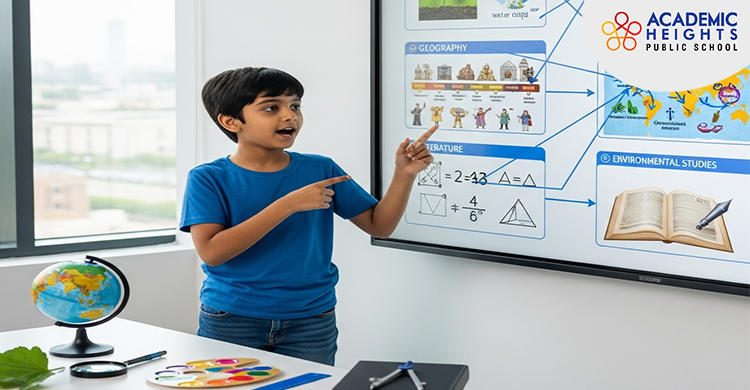
Have you ever wondered what happens when math, science, and art come together? That’s interdisciplinary learning!
You can think creatively, investigate real-world issues, and develop innovative solutions. It shows how knowledge connects across other subjects and makes learning engaging and meaningful.
How Does It Differ from Traditional Learning?
Ever wondered what happens when subjects work together instead of alone?
Interdisciplinary learning in education combines concepts from various disciplines, allowing students to apply their knowledge, solve real-world problems, and discover how learning relates in fascinating and important ways outside of the classroom.
Why Schools Are Adopting Interdisciplinary Approaches
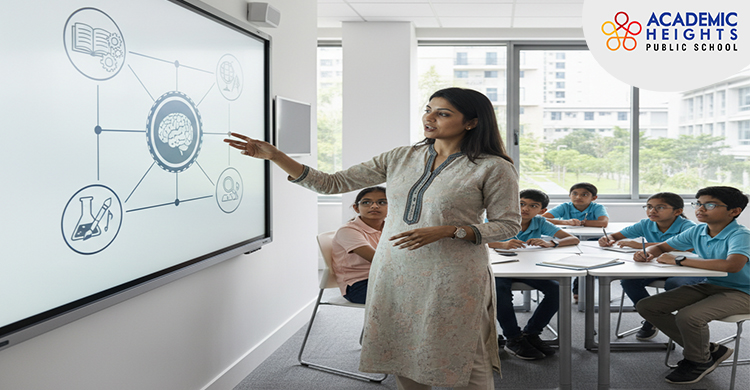
The reason schools are embracing interdisciplinary approaches is simple: students need more than isolated lessons.
The importance of interdisciplinary learning lies in showing how subjects relate, fostering creativity, problem-solving, and practical thinking, so learning feels connected, relevant, and prepares students for real-world situations.
Core Principles of Interdisciplinary Learning
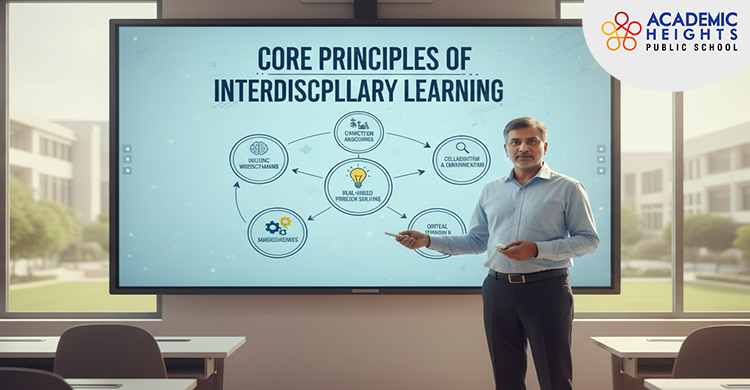
Let’s explore the core principles of an interdisciplinary learning environment, where students engage deeply, think broadly, and experience learning in a connected, dynamic, and meaningful way.
Connecting Concepts Across Multiple Subjects
Students are better able to comprehend topics in a wider perspective when they make connections between concepts from other subjects.
For instance, designing a model on renewable energy can combine physics, math, and art, showing how knowledge from several fields can be applied creatively to solve real problems.
Encouraging Critical Thinking and Problem-Solving
Students are better able to question, analyse, and make judgments when critical thinking and problem-solving are encouraged.
For instance, they may plan, assess choices. They can then come up with workable solutions when they decide how to minimise waste in their classroom or plan a school function.
Promoting Collaboration and Creativity
Through practical projects, students develop their creativity and teamwork skills.
Designing a school newsletter, creating a short film, or organising a mini science exhibition lets them exchange ideas, come to conclusions as a group, and turn creative ideas into interesting and concrete results.
Key Benefits of Interdisciplinary Learning
Interdisciplinary learning makes education more interesting, meaningful, and better equipped for students’ difficulties in the real world by fostering critical thinking, problem-solving, and cross-disciplinary linkages.
Enhances Problem-Solving Abilities
Interdisciplinary learning enhances problem-solving by encouraging critical thinking.
Using the best methods for interdisciplinary teaching, like conducting a student-led survey on school recycling habits, enables students to analyse data. They develop solutions and apply their learning in the practical world.
Builds Creativity and Innovation
Students are encouraged to think creatively and try out concepts from many subjects through interdisciplinary learning.
By examining problems from several perspectives, they come up with creative solutions, engage in unique approaches, and acquire the self-assurance to use creative concepts in real-world circumstances.
Strengthens Real-World Understanding
This method aids students in seeing how what they learn in the classroom relates to real-world situations.
Lessons become more applicable, useful, and simpler to link to real-world events both inside and outside of school when students apply concepts to circumstances they are familiar with.
Improves Teamwork and Communication Skills
When students collaborate across tasks, the importance of interdisciplinary learning becomes evident.
They develop the teamwork and communication skills necessary for successful collaboration in learning environments and future workplaces. It can be done through group discussions, shared responsibilities, and the exchange of ideas.
They also learn to listen intently, communicate clearly, and respect diverse points of view.
Supports Personalised Learning Styles
Everybody learns in a unique way, and that’s something to celebrate! By supporting personalised learning styles, students can explore ideas in ways that feel natural to them.
This keeps learning interesting, boosts self-esteem, and enables each student to connect profoundly with ideas in a way that is specific to them.
Effective Methods of Interdisciplinary Learning
Let’s examine the best methods for interdisciplinary teaching that enable students to make connections between concepts, participate actively, and have meaningful, useful, and motivating learning experiences.
Project-Based Learning
Have you ever pondered how learning may resemble tackling problems in the real world?
Through hands-on projects, active idea exploration, and teamwork, project-based learning enables students to demonstrate the connections between many courses while making education engaging, useful, and memorable.
Problem-Based Learning
Imagine students planning a small class exhibition. Through problem-based learning, they can choose themes, set up exhibits, and overcome obstacles.
This practical method fosters collaboration, makes connections across disciplines, and develops critical thinking abilities that students may use outside of the classroom.
STEM and STEAM Integration
Ever wondered how science, tech, engineering, arts, and math can work together?
Through the mix of STEM and STEAM, students might develop a mobile application to monitor school energy consumption, test designs, and overcome obstacles while artistically investigating concepts in practical and significant ways.
Collaborative Group Activities
Working together can make learning more exciting. In collaborative group activities, students might research and present solutions for improving the school recycling program.
They develop teamwork, problem-solving abilities, and a deeper understanding of issues by exchanging ideas, dividing tasks, and combining information from several subjects.
Real-World Case Studies
How can we learn from real events? Using real-world case studies, students might analyse a local recycling initiative, explore what worked and what didn’t, and propose improvements.
This method makes connections between topics, develops critical thinking skills, and demonstrates how what is learned in the classroom relates to real-world situations.
Key Challenges in Interdisciplinary Learning
Although interdisciplinary learning has numerous advantages, there are drawbacks as well. Let’s examine the challenges that educators and students encounter and how to successfully overcome them.
Need for Teacher Training or Experience
Have you considered the challenges associated with interdisciplinary learning? One big challenge is that teachers may not have enough training or experience.
Without enough planning, it can be difficult to guide students across courses, organise lessons, and assist them in making connections between concepts.
Difficulty in Aligning Curriculum Across Subjects
Have you ever attempted to balance several subjects at once? This is how curriculum alignment in interdisciplinary learning feels.
Finding that balance is crucial for meaningful, integrated learning, but it may be challenging for teachers to prepare and for students to follow when different themes and schedules conflict.
Time and Resource Limitations
Managing time and resources is a significant difficulty in interdisciplinary learning.
Giving students the comprehensive, connected learning experience they deserve can be challenging since teachers may find it difficult to cover several courses in a short amount of time, and schools may not have the resources for practical projects.
Assessment Challenges
How can learning across subjects be fairly assessed? One of the main obstacles to interdisciplinary learning is that.
For instance, evaluating a group research project on renewable energy necessitates evaluating comprehension, collaboration, and presentation abilities, making it challenging to precisely gauge each student’s contribution.
Lack of Student Readiness or Engagement
Students aren’t always prepared to make connections or maintain interest. For instance, working on a multisubject assignment on your own can be overwhelming.
Such a challenge highlights how difficult interdisciplinary learning can be when students lack guidance, making motivation and confidence hard to sustain.
How Schools Can Successfully Implement Interdisciplinary Learning
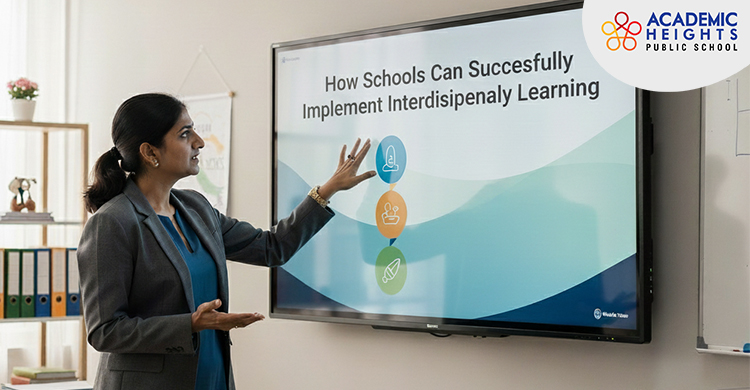
Let’s explore how interdisciplinary learning in education can be successfully implemented, helping schools create engaging, connected lessons that build critical thinking, creativity, and real-world problem-solving skills for students.
Training Teachers for Collaborative Planning
How can educators effectively implement interdisciplinary learning? By training for collaborative planning!
When teachers work together to design lessons, like a team creating a combined science-and-art project, they can align subjects, anticipate challenges, and guide students confidently through hands-on, meaningful learning experiences.
Creating Flexible and Integrated Curriculum
Learning is like assembling a puzzle; each subject is a piece.
These elements are put together by a flexible, integrated curriculum, which enables students to grasp the big picture, comprehend the connections between concepts, and engage with teachings in a meaningful, practical, and interesting way.
Using Technology and Digital Tools
Have you ever considered how technology can improve the connectivity of education?
Interdisciplinary learning in education can be made more engaging, hands-on, and relevant than standard lessons by utilising digital technologies that allow students to produce interactive presentations, analyse data, or replicate experiments.
Encouraging Experiential and Hands-On Learning
Want students to really get what they learn?
Encouraging experiential, hands-on activities lets them explore ideas directly, like testing chemistry experiments or building small projects, making lessons memorable, interactive, and showing how knowledge from different subjects comes together in practical and real-world ways.
Regular Feedback and Continuous Improvement
Applying interdisciplinary learning into practice is similar to training for a sports match.
With regular feedback and continuous improvement, students hone their abilities, modify their approaches, and gain self-assurance.
This makes learning more efficient, interesting, and prepares students to take on challenges in a variety of topics.
Conclusion:-
Beyond just imparting knowledge, a dynamic interdisciplinary learning environment changes how students think, create, and solve issues.
It gives students the tools they need to face issues head-on by stimulating creativity, linking ideas, and promoting teamwork.
In addition to fostering academic success, schools that use this strategy help students develop the abilities and mindset necessary to contribute significantly in a world that is changing quickly and is complicated. To explore how we make this possible for students, visit us at https://www.academicheights.in/.