
Reading is one of the most important skills students develop during their school years. Strong reading abilities help children learn new concepts, complete assignments with confidence, and perform better across all subjects. Knowing how to improve reading speed and comprehension allows students to read efficiently while understanding what they learn. With the right habits, regular practice, and effective learning strategies, every child can achieve reading speed improvement and strengthen reading comprehension skills that support lifelong academic success.
Why Reading Speed and Comprehension Matter
Reading quickly is helpful, but understanding what you read is even more important. When speed and comprehension work together, students become confident learners who enjoy reading and perform better in every subject.
The Connection Between Speed and Understanding
Reading faster does not mean rushing through words. Good readers recognise phrases naturally, understand ideas clearly, and remember important information. This balance helps improve reading speed and comprehension, making learning more enjoyable while supporting better memory retention, active reading, and overall understanding of every lesson.
Why Reading Skills Affect Academic Success
Strong reading comprehension skills are the foundation of success in every subject. Whether solving Maths word problems, understanding Science concepts, or analysing Social Studies chapters, reading plays a vital role. Reading fluency for students develops stronger study skills, improved academic performance, and greater confidence in classroom learning.
Common Reading Challenges Students Face
Many students read slowly, lose focus, or struggle to remember what they have read. Others find unfamiliar words confusing or become distracted while studying. These challenges can affect focus and concentration, reduce understanding, and make reading feel difficult. Fortunately, consistent practice helps children overcome these obstacles.
Why Students Struggle with Reading Speed and Comprehension
Every child struggles with reading for different reasons. Identifying the root cause allows parents and educators to provide personalised guidance and targeted support, helping students overcome challenges and make meaningful progress.
Limited Vocabulary
A limited vocabulary often interrupts reading, as students stop frequently to understand unfamiliar words. This affects reading flow and reduces comprehension. Regular vocabulary development through books, conversations, and age-appropriate reading materials helps students understand texts more easily while supporting long-term reading speed improvement.
Poor Concentration While Reading
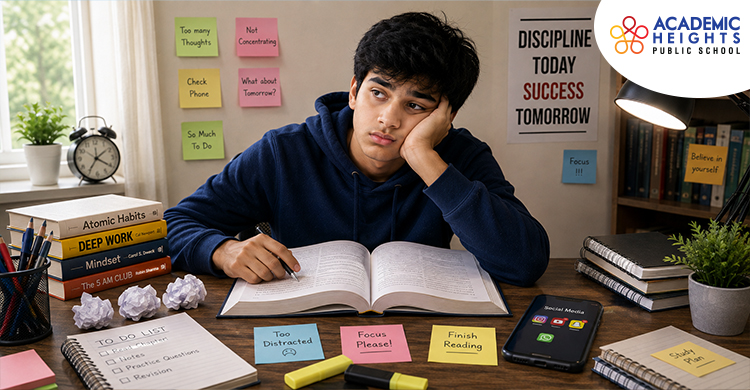
Distractions make it difficult for students to stay focused on what they read. Poor concentration while reading often causes children to miss important details or forget information quickly. Creating a calm environment and reading without interruptions improves focus and concentration, leading to better understanding and stronger learning outcomes.
A stronger attention span in school kids can help students stay focused on longer texts and understand information without repeatedly losing track of what they are reading.
Reading Without Understanding the Purpose
Students often begin reading without knowing why they are reading. Without a clear purpose, it becomes harder to identify key ideas or remember important information. Setting a goal before reading encourages active reading, improves comprehension techniques, and helps students stay engaged throughout the passage.
Approaching a text with questions and a clear purpose encourages thinking-based learning, helping students engage more actively with what they read.
Lack of Regular Reading Practice
Like any other skill, reading improves with regular practice. Students who read only for homework may struggle to build confidence and fluency. Daily reading develops better reading habits, strengthens reading comprehension skills, and gradually increases speed while making reading a natural part of everyday learning.
Common Habits That Slow Down Reading
Certain reading habits reduce both speed and understanding without students even noticing. Replacing these habits with effective techniques can help children become faster, more focused, and more confident readers.
Reading Every Word Aloud Mentally (Subvocalization)
Many students silently pronounce every word in their minds while reading. This habit, called subvocalisation, slows reading considerably. Learning to recognise groups of words instead of individual words is one of the most effective faster reading techniques for improving reading fluency and overall comprehension.
Frequently Re-Reading Sentences
Some students repeatedly go back to earlier sentences because they lose focus or feel unsure about what they have read. While occasional review is helpful, constant re-reading reduces reading speed. Building confidence through comprehension techniques and better concentration gradually minimises this habit.
When students struggle to understand information the first time, they may also experience the same difficulty that makes them feel they forget everything they study before exams.
Losing Focus Due to Distractions
Smart phones, background noise, and unnecessary interruptions can reduce reading efficiency. Even brief distractions affect understanding and memory. Creating a quiet study space helps students maintain focus and concentration, improving both reading speed and long-term memory retention during study sessions.
Reading Without a Clear Goal
Students often begin reading without deciding whether they are reading to learn, revise, or gather information. Having a purpose improves attention and helps readers identify important points quickly. This simple habit supports how to read faster and understand better while strengthening overall comprehension.
How To Improve Reading Speed and Comprehension
Improving reading is not about rushing through pages. It is about developing habits to understand ideas clearly and remember information for longer. These simple yet effective methods show how to improve reading speed and comprehension while making reading more enjoyable every day.
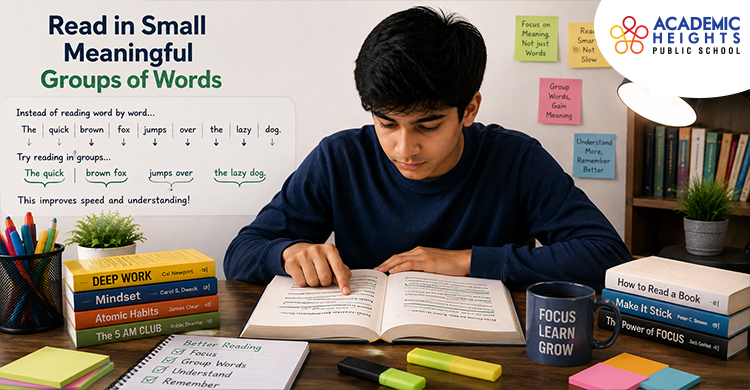
Read in Small Meaningful Groups of Words
Instead of reading one word at a time, students should train their eyes and brain to recognise small groups of words. This improves reading flow and reduces unnecessary pauses. Among the most effective faster reading techniques, this method supports reading fluency for students and makes it much easier to understand the complete ideas.
Set a Purpose Before Reading
Before opening a book, students should decide what they want to learn. A clear objective helps them stay focused and identify important information more quickly. This simple habit is one of the best answers to how to read faster and understand better, as it encourages the mind to focus on which way to pay better attention.
Practice Active Reading Techniques
Active reading means engaging with the text instead of simply reading the words. Students can underline key points, ask questions, make predictions, or write short notes. These reading comprehension strategies improve understanding, strengthen critical thinking, and help children remember information long after they finish reading.
Increase Daily Reading Time
Consistency is the key to reading speed improvement. Reading for just 20–30 minutes every day helps students become familiar with different writing styles and vocabulary. Over time, regular practice builds confidence, strengthens reading habits, and helps improve reading skills for students without making reading feel difficult.
Effective Strategies to Boost Reading Comprehension
Reading is most valuable when students understand and remember what they have learned. By using simple comprehension techniques before, during, and after reading, children can strengthen their understanding and become more independent learners.
Ask Questions While Reading
Encourage students to ask questions such as, “What is happening?” or “Why did this happen?” while reading. This habit promotes critical thinking, keeps the mind engaged, and improves reading comprehension skills. It is also one of the best ways to improve reading comprehension for students naturally.
Asking why, how, and what a passage means helps students develop critical thinking skills while improving their understanding of complex information.
Summarize Key Ideas
After completing a passage, one should explain the main ideas in their own words. Summarising strengthens memory retention, improves understanding, and develops effective study skills. It also helps teachers and parents assess whether children have truly understood what they have read.
Highlight Important Information
Highlighting keywords, important facts, or useful examples helps the brain focus on key points and organise information more effectively. Combined with simple note-taking, this technique improves revision and supports stronger comprehension techniques. Students can quickly review important concepts without reading the entire chapter again.
Build Vocabulary Regularly
Learning a few new words every day helps children read with greater confidence and fewer interruptions. Strong vocabulary development improves understanding across every subject and supports reading comprehension strategies. It also plays a major role in helping students read faster without losing understanding.
Daily Exercises to Improve Reading Skills
Daily practice is one of the most effective ways to build confident readers. These simple activities strengthen both speed and understanding while making reading an enjoyable part of every student’s routine.
Timed Reading Practice
Set a timer and read a passage comfortably before checking how much one is able to understand. Repeating this activity regularly is one of the most effective reading exercises to improve speed and comprehension. It develops confidence while encouraging gradual reading speed improvement without creating unnecessary pressure.
Reading Different Types of Texts
Students should read storybooks, newspapers, biographies, informational articles, and poems to build versatile reading abilities. Different formats introduce new vocabulary, writing styles, and ideas. This variety helps improve reading skills for students while preparing them to understand different academic and real-life texts confidently.
Using Reading Apps and Tools
Age-appropriate reading apps, digital libraries, and educational platforms can make reading more engaging. Many include interactive quizzes, vocabulary activities, and progress tracking that strengthen reading comprehension skills. When used wisely, technology becomes a valuable part of modern learning strategies for young readers.

Keeping a Reading Journal
Maintaining a reading journal encourages students to record new words, favourite ideas, and short summaries after each reading session. This simple habit improves note-taking, reinforces memory retention, and helps children reflect on their learning. It is also one of the best ways to improve reading comprehension for students over time.
Recording key ideas, questions, and personal observations can help students develop real-world skills beyond academics, including communication, reflection, and independent thinking.
How Parents and Teachers Can Help Students
Parents and teachers play an important role in developing confident readers. With the right encouragement, guidance, and a positive learning environment, children can build strong reading habits that improve both speed and understanding over time.
Encourage Daily Reading Habits
Reading should become a part of a student’s daily routine, whether through storybooks, newspapers, or educational articles. Regular practice helps improve reading skills for students, strengthens reading habits, and supports steady reading speed improvement. Even 20 minutes of reading each day can make a noticeable difference.
Discuss What Children Read
Talking about books encourages children to think beyond the words on the page. By asking simple questions about characters, events, or key lessons, parents and teachers can strengthen children’s reading comprehension skills while encouraging critical thinking. These meaningful discussions also help students build stronger reading habits and discover how to improve reading skills engagingly and enjoyably.
Create a Distraction-Free Reading Environment
A quiet and organised reading space helps children stay focused on their books. Reducing noise, limiting screen distractions, and maintaining a comfortable study area improve concentration while reading. Among the top tips to read faster without losing understanding, removing distractions is key, as it allows students’ brains to focus on understanding information more clearly and remember it for longer.
Celebrate Reading Progress
Recognising every milestone, whether completing a book or learning new words, motivates children to keep reading. Positive encouragement builds confidence and creates lasting interest in books. Celebrating progress reminds students that small, consistent efforts lead to continuous improvement and stronger reading abilities.
Mistakes to Avoid While Improving Reading Skills
To improve reading speed and comprehension also means avoiding habits that limit progress. By recognising common mistakes, students can develop balanced reading practices that improve both speed and understanding.
Focusing Only on Speed
Reading quickly without understanding the content defeats the purpose of reading. Students should aim for steady progress instead of racing through pages. One of the best tips to read faster without losing understanding is to prioritise comprehension, ensuring the text makes sense before gradually increasing speed.
Ignoring Comprehension
Some students finish chapters without checking whether they understood the main ideas. This weakens learning and affects future lessons. Why reading comprehension is important for students becomes clear when they are able to explain concepts, answer questions confidently, and apply their knowledge effectively.
Skipping Difficult Words
Ignoring unfamiliar words interrupts learning and limits vocabulary growth. Instead, students should pause to understand new words using a dictionary or context clues. Regular vocabulary development improves understanding, supports reading comprehension strategies, and makes future reading smoother and more enjoyable.

Inconsistent Reading Practice
Reading only before examinations makes it difficult to develop fluency and confidence. Like any skill, reading requires regular practice. Regular practice enables the brain to process words seamlessly. Performing reading exercises to improve speed and comprehension consistently helps students become faster readers while strengthening long-term understanding and retention.
Long-Term Benefits of Better Reading Skills
Strong reading skills benefit students far beyond the classroom. As children become confident readers, they develop valuable abilities that support academic success, personal growth, and lifelong learning.
Better Academic Performance
Students with strong reading abilities understand lessons more easily, complete assignments accurately, and prepare better for examinations. Consistent practice ensures that reading speed improvement and stronger comprehension contribute directly to better academic performance, helping children perform confidently across every subject in school.
Improved Critical Thinking
Reading encourages students to analyse information, compare ideas, and make thoughtful decisions. Regular active reading develops stronger critical thinking skills, helping children evaluate situations logically instead of memorising facts. These abilities benefit both classroom learning and everyday problem-solving.
Strong reading comprehension allows students to analyse information, compare different viewpoints, and build problem-solving skills that are useful both inside and outside the classroom.
Greater Confidence in Learning
When students understand what they read, they participate more actively in classroom discussions and complete tasks with confidence. Learning how students can improve reading skills gives children the self-belief to explore new topics, ask thoughtful questions, and enjoy discovering knowledge independently.
Lifelong Learning Habits
Reading is a lifelong skill that continues to support personal and professional growth. Students who develop strong reading habits at an early age become curious learners who enjoy exploring new ideas. This is another reason why reading comprehension is important for students, as it builds a strong foundation for lifelong success.
FAQs (Frequently Asked Questions)
Q1. How can students improve reading speed and comprehension?
Students can improve reading by practising every day, reading in meaningful ways, setting a purpose before reading, and using active reading techniques such as summarising, highlighting key points, and asking questions. These habits improve both speed and understanding over time.
Q2. Why is reading comprehension important?
The reason why reading comprehension is important for students lies in its direct impact on learning. Good comprehension helps students understand lessons, remember information, solve problems confidently, and perform better in examinations across all subjects.
Q3. What causes slow reading in students?
Slow reading is often caused by limited vocabulary, poor concentration, subvocalisation, frequent re-reading, distractions, and irregular reading practice. Identifying these challenges is the first step towards reading speed improvement.
Q4. How much should students read every day?
Students should aim to read for at least 20–30 minutes daily. Regular reading strengthens fluency, improves comprehension, expands vocabulary, and helps develop lifelong reading habits.
Q5. Can reading speed improve without reducing comprehension?
Yes. Students can increase their reading speed without affecting understanding by practising faster reading techniques, reading regularly, and focusing on meaningful phrases instead of individual words. The goal is to read efficiently while maintaining strong comprehension.
Q6. Which exercises help improve reading skills?
Some of the best reading exercises to improve speed and comprehension include timed reading sessions, summarising passages, keeping a reading journal, reading different types of texts, and practising vocabulary-building activities. These exercises help students become faster, more confident, and more effective readers.
Conclusion
Learning to improve reading speed and comprehension is a gradual process that combines regular practice, effective strategies, and consistent encouragement. By developing strong reading comprehension skills, improving vocabulary, and building positive reading habits, students become more confident learners inside and outside the classroom. At Academic Heights Public School (AHPS), we believe that nurturing confident readers today helps children become successful, independent learners tomorrow. With patience and the right guidance, every student can enjoy reading while achieving lasting academic success.