
Festivals in India are more than celebrations. They bring families together, connect us with our traditions, and teach valuable lessons about life. Dussehra and Navratri are two festivals closely connected by stories of courage, devotion, and the triumph of good over evil. While Navratri is known for nine nights of Goddess worship, Dussehra marks the tenth day and celebrates victory. But what is the relationship between Navratri and Dussehra? Let’s understand how these festivals come together and why their connection is important.
Understanding Navratri – The Nine Nights of Devotion
Before celebrating ultimate victory, we begin with a period of deep spiritual dedication. To understand the Navratri to Dussehra celebration, we must first explore the powerful essence of these nine nights.
The Significance of Nine Days
The nine nights of Navratri represent a period of devotion, discipline, and spiritual strength. Each day is associated with a different form of Goddess Durga, known as Navadurga. Devotees pray, fast, visit temples, and take part in cultural traditions. Understanding the significance of the nine days helps us reflect on developing patience, courage, and faith while overcoming challenges in life.
Different Forms of the Goddess Worshipped
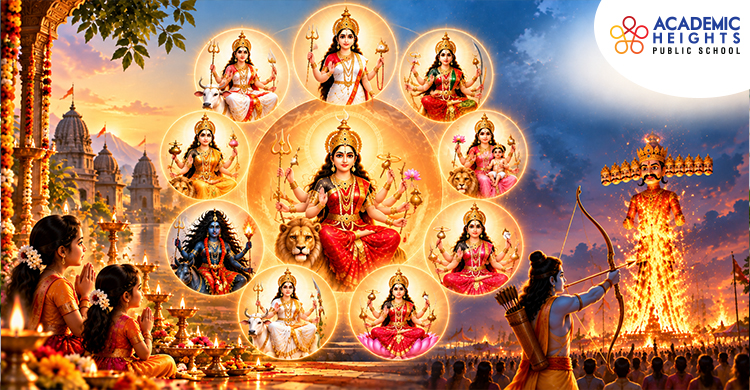
During Navratri, devotees worship nine forms of Goddess Durga, with each form representing a different quality. These include Shailaputri, Brahmacharini, Chandraghanta, Kushmanda, Skandamata, Katyayani, Kalaratri, Mahagauri, and Siddhidatri. This intense Goddess worship symbolizes overcoming inner flaws like greed, anger, and ego. It forms the essential story behind Navratri leading to Dussehra, showing how righteousness builds up daily before achieving final triumph.
Regional Variations in Navratri Celebrations
Dussehra and Navratri take different forms across India. Gujarat comes alive with Garba and Dandiya, while West Bengal celebrates Durga Puja with grand pandals and rituals. Beyond their cultural beauty, these traditions highlight the significance of the Hindu festival calendar by showing how different regions express shared core values. These celebrations beautifully reflect the diversity of Indian culture and show how Hindu festivals can have different expressions while sharing common values.
What Happens on the Tenth Day – Dussehra
After nine intense days of prayer and reflection, the atmosphere turns celebratory. As a result, exploring why Dussehra comes after Navratri brings us to the grand culmination known as Vijayadashami.
The Meaning of Vijayadashami
Exploring the Dussehra Vijayadashami meaning reveals deep roots in the celebration of righteousness. “Vijaya” means victory, while Vijayadashami marks the end of the festive period. The day symbolises the triumph of good over evil, reminding us that truth, courage, and goodness ultimately overcome negativity and wrongdoing.
The Story of Ram’s Victory Over Ravana
One of the most popular stories behind Dussehra is the Ram Ravana story from the Ramayana. When Ravana abducted Sita and took her to Lanka, Lord Rama fought a long battle against him. In the end, Rama defeated Ravana and rescued Sita. His victory symbolises the triumph of righteousness over arrogance and evil, which is why Dussehra is celebrated as the victory of good over evil.
Ravana Dahan and Its Symbolism
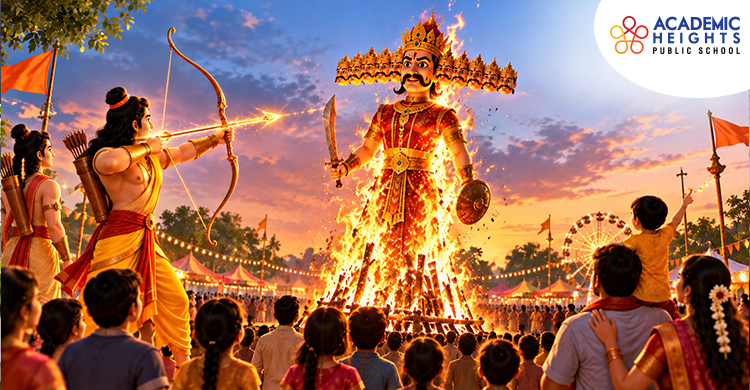
In many parts of India, Dussehra celebrations include Ravana Dahan, where large effigies of Ravana are set on fire. The burning of the effigy symbolises the removal of negative qualities, i.e., anger, pride, greed, and dishonesty. Along with the excitement of Ramlila and festive gatherings, these festive rituals remind us that the real victory is over the weaknesses within ourselves.
How Dussehra and Navratri Are Connected
So, how are Navratri and Dussehra connected? The answer lies in the shared idea of victory over evil. Navratri celebrates Goddess Durga’s victory over Mahishasura, while Dussehra remembers Lord Rama’s victory over Ravana.
Quick Comparison: Navratri vs Dussehra
| Feature | Navratri | Dussehra |
|---|---|---|
| Duration | Nine nights | Tenth day |
| Main significance | Devotion and worship | Victory of good over evil |
| Key traditions | Puja, fasting, Garba, Durga Puja | Ramlila, Ravana Dahan, Vijayadashami |
| Major stories | Goddess Durga and Mahishasura | Lord Rama and Ravana |
| Celebrations | Vary across regions | Vary across regions |
Dussehra as the Culmination of Navratri
The relationship between Navratri and Dussehra is best understood as two connected parts of a single festive period. The first nine days focus on devotion, while the tenth day celebrates victory. This explains why Dussehra comes after Navratri in the Sharad Navratri tradition. Together, they create a ten-day celebration filled with prayers, stories, rituals, and cultural traditions.
The Significance of the Tenth Day
Celebrating the significance of the tenth day after Navratri brings profound joy. Moreover, looking ahead at the Navratri and Dussehra 2026 dates and meaning in the holy Ashwin month shows how ancient spiritual wisdom seamlessly shapes our everyday choices and moral values in modern life.
Shared Themes of Good Over Evil
Although the stories and customs may differ, both festivals carry the same powerful message. Goddess Durga’s victory over Mahishasura and Lord Rama’s victory over Ravana represent good over evil. These moral stories teach us that courage, truth, patience, devotion and faith can help us face difficulties and choose what is right.
Regional Celebrations Connecting Navratri and Dussehra
Indeed, India’s diversity shines brightly through different traditions. Furthermore, exploring the difference between Dussehra and Navratri celebrations reveals how unique regions honor these holy days.
Durga Puja in West Bengal
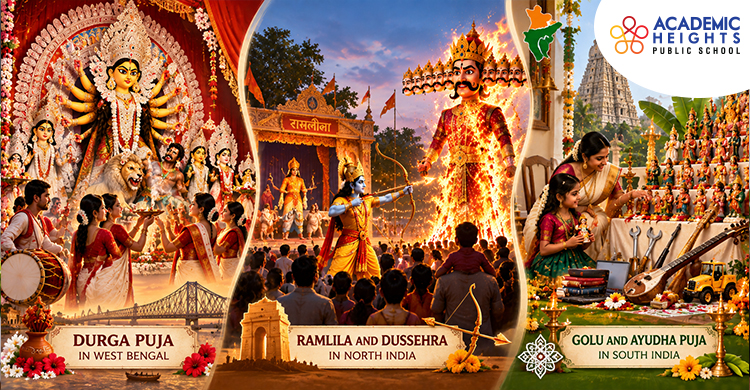
In West Bengal, Navratri is celebrated prominently as Durga Puja. During this time, beautiful pandals, artistic idols, prayers, music, and community gatherings become part of the celebration. Moreover, this tradition beautifully connects Goddess worship for six days, from Mahalaya or Shashti up to Vijaya Dashami. Finally, the last day marks Goddess Durga’s farewell, while also conveying a broader message of victory and hope.
Ramlila and Dussehra in North India
In North India, Ramlila brings the Ramayana to life through drama and storytelling. Furthermore, on Dussehra, people celebrate Lord Rama’s victory over Ravana through Ravana Dahan. In this way, learning about the significance of the Hindu festival calendar helps children understand the cultural stories, traditions, and values connected with these meaningful celebrations.
Golu and Ayudha Puja in South India
In parts of South India, Navratri includes the beautiful tradition of Golu, where dolls and figurines are arranged and displayed in homes. Ayudha Puja, which honors tools, instruments, books, and work, is another important tradition. Vijayadashami is also considered an auspicious time for learning. These practices show the diversity of Indian culture and the many ways festivals are celebrated.
Why This Connection Matters for Children
Sharing these stories with young learners helps them grow with strong moral grounding. Furthermore, exploring the true meaning behind Dussehra and Navratri helps build lasting cultural bridges for children.
Understanding Cultural Roots Through Festivals
Children learn best when they can connect ideas with real experiences. Festivals introduce them to stories, music, art, rituals, and family traditions. Understanding the story behind Navratri leading to Dussehra helps children see how different celebrations are connected. It also encourages respect for the diverse traditions that make India unique.
Lessons of Devotion, Patience, and Courage
The stories of Goddess Durga and Lord Rama teach children that challenges can be faced with courage and determination. Understanding the Dussehra Vijayadashami meaning helps children learn about the triumph of good over evil, while the Navratri nine days significance lies in teaching devotion and patience. Together, these festivals teach children the value of staying strong, doing the right thing, and believing in themselves.
Keeping Traditions Alive Across Generations
Traditions continue when children understand their meaning and take part in them. The Navratri to Dussehra celebration gives children a chance to experience their culture firsthand through festivities at home, school, and in the community. Stories, crafts, performances, prayers, and festive activities can help pass cultural traditions from one generation to the next.
Frequently Asked Questions
Navratri represents nine nights of worship and preparation, while Dussehra is the tenth day celebrating ultimate victory. Together, they complete a continuous journey of faith and triumph.
Dussehra comes on the tenth day because it marks the day Goddess Durga defeated Mahishasura and Lord Rama defeated Ravana after nine days of spiritual preparation.
Vijayadashami combines “Vijaya” (victory) and “Dashami” (tenth day), symbolizing the victory of truth and righteousness over wickedness.
In North India, celebrations center on Ramlila and Ravana effigy burning. In East India, Durga Puja dominates, while South India focuses on Golu displays and Ayudha Puja.
Ravana Dahan represents Lord Rama’s victory over the ten-headed demon king Ravana, symbolizing the destruction of evil qualities like ego and greed.
These festivals teach children patience, devotion, courage, and the fundamental moral lesson that good always triumphs over evil.
Conclusion
The connection between Dussehra and Navratri is a beautiful example of how Indian festivals combine devotion, stories, values, and celebration. Navratri brings nine nights of Goddess worship, while Dussehra marks the victorious tenth day. Whether through Durga Puja, Garba, Ramlila, or Ravana Dahan, the message remains powerful: good can overcome evil. Understanding these festivals helps children appreciate Indian culture, respect traditions, and carry their values forward with confidence.