
This issue is very common in any classroom. Students hesitate to speak up in front of the class when teachers ask a question. And silence doesn’t always mean understanding. Instead, it could be the fear Asking Questions in Class, worried about sounding absurd, being judged, or being wrong. Only clarity, confidence and curiosity can tackle this fear. This blog is a perfect read for any student who hesitates to ask questions, and for anyone who wants to know what teachers, parents, students, and schools can help students fear asking questions and transform silence into conversation. Small, consistent changes can bring a huge impact.
Why Students Fear Asking Questions in Class
Very rarely does this fear come from laziness or disinterest. Most of the time it grows from deep human worries, and understanding why students fear asking questions is the first step toward helping students to speak up. It also helps explain why do students fear asking questions in class and why some students afraid to ask questions may need a little more time and support.
Fear of Giving the Wrong Answer
For some students, asking a question is a very horrible task, because they can be wrong too. Until they’re completely certain, they choose to stay quiet. Anxiety and fear of making mistakes are the main reasons students fear asking questions, because in this scenario, silence seems better than being incorrect in public. This fear makes sense because students face fear asking questions in class.
Worry About What Classmates Will Think
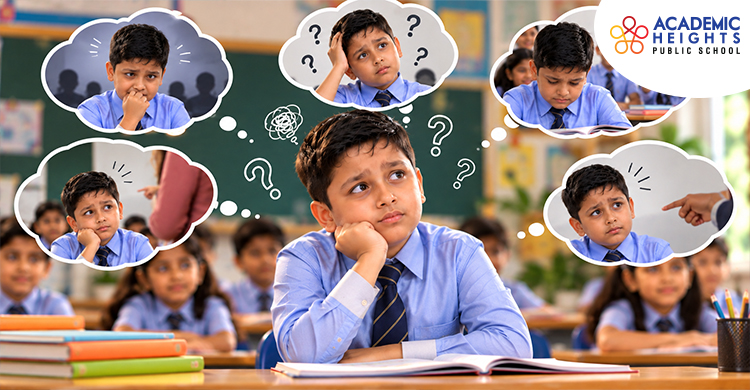
In front of a class, no one would like to be a joke. The fear of peer opinion is one of the most common reasons behind a student’s silence in class, and large classes put more weight on this reason. The bigger the audience, the higher the fear. This is one cause students afraid to ask questions may stay silent even when they have a genuine doubt.
Lack of Confidence or Understanding
Sometimes, this fear stays inside. The student who didn’t understand the concept clearly may not phrase a question or may worry that it will expose their dumbness. In terms of the questioning skills, weak conceptual understanding and underdeveloped questioning can stay alongside anxiety and fear of negative judgement. When students hesitant to ask questions lack confidence, they may need support in developing both understanding and classroom communication skills.
Previous Negative Classroom Experiences
One embarrassing moment can transform into a lifetime memory. A student who was laughed at, scolded or brushed off once may become unconfident. With time, the fear of looking ‘stupid’ can become dominant in a student’s mindset. Such experiences can help explain why students fear asking questions and why students hesitant to ask questions may avoid speaking up.
How Fear of Asking Questions Affects Learning

Silence may seem harmless, but it affects us gradually. When questions stay unasked, problems stay unresolved, and it shows bad results in understanding, participation and self-belief. For students afraid to ask questions, this can affect classroom participation and student confidence in class over time. The effects of Fear Asking Questions in Class can gradually influence understanding, participation, and confidence.
Gaps in Understanding Can Grow
Learning works in layers. For example, in subjects like science, every new concept is an add-on to a previous concept; therefore, an unresolved problem can gradually become a knowledge gap. As a result, failing to clear current doubts can make harder concepts more difficult to understand. Over time, a small misunderstanding today can become a big obstacle in the future. Therefore, asking questions in the classroom matters for student engagement and deeper understanding.
Lower Classroom Participation
When only a few students engage in the class, it disrupts the whole class. One review stated that only a quarter of students generally respond to questions in the class, which results in a drop in classroom participation as the class grows. Teachers keep interacting with those who are responding and miss what quieter learners are understanding. Learning how to improve classroom participation in students therefore means creating more ways for every learner to take part.
Reduced Confidence in Learning
Each unasked question makes a student feel assured that his doubts don’t belong here. With time, students start to perceive themselves as weak learners when they simply lack a safe way to ask. Fear slowly affects curiosity, and the students start to stay silent instead of crying out in any moment of embarrassment. Building student confidence in class means making it easier to ask, clarify and participate without fear.
How Teachers Can Encourage Students to Ask Questions
Teachers shape the emotional environment of a class to bring every student together for learning. Some good deliberate habits of teachers can turn a quiet classroom into one where questions are expected, welcomed, and valued. Knowing how teachers can encourage students to ask questions can also help schools strengthen classroom communication skills and student engagement in classroom.
Create a Safe Classroom Environment
Encourage students to ask questions from the start. And reassure students that no question is silly. Then prove it. Set ground rules against mocking, share your own mistakes, and treat confusion as useful information. Students watch how the first questions are perceived before asking anything. This is a practical way to learn how we can encourage students to ask questions in class, without making anyone feel pressured.
Respond Positively to Student Questions
Your approach to answering questions is vital to the learning environment. Thank the student and take the question seriously. Scolding or ignoring a question can leave a student feeling unappreciated and less confident about asking again. A positive response can encourage students to ask questions and strengthen student confidence in class.
Give Students Time to Think
A quiet moment after a question doesn’t mean that you’ve failed. It could be a process of thinking. Mary Budd Rowe (an American educator) found that teachers usually wait for two seconds after asking a question, while a pause of more than three seconds increases creativity and learning in a student. Longer waits mean more engagement, longer answers and fewer “I don’t know” replies. So try counting to three in mind before calling on anyone. This simple pause can make asking questions in the classroom feel less intimidating.
Use Small-Group and Pair Discussions
Engaging with a few students feels far better than addressing thirty. Think-pair-share, where students reflect alone, discuss with a partner, then share with the class, helps here. Among 9th-grade students, hand raising is more common than sharing alone, especially among students who describe themselves as shy. Smaller discussions can help students fear asking questions less and improve classroom participation.
How Parents Can Build Confidence in Asking Questions

Any child’s relationship with questions begins with their parents. The classroom isn’t where curiosity is born; it’s at home, where a parent’s reaction to “why?” either sparks a child’s wonder or shuts it down. This is also where we learn that how parents can help children ask questions in class.
Encourage Curiosity at Home
Try to make everyday moments question-friendly. Ask “What was the most interesting thing you noticed today?” instead of only “What did you score?” Learn together and freely admit what you don’t know. Assure them that not knowing something is the beginning of learning, not a shame. These habits can help parents in learning how to build confidence in students in the classroom through everyday encouragement.
Listen Without Judging
When a child asks something, stop the other activities, if not necessary, listen fully, and give your best in replying, even if the question is very basic. Children who know that there’s someone to listen to them find it helps them to carry this motivation in the classroom. This support can make it easier for students hesitant to ask questions to speak openly.
Help Children Express Their Doubts
Many children know what to ask, but they hesitate or become unable to form any question. Teach them simple starters like, “Can you repeat it, please?” or “I didn’t understand what you said!” Practising these little moments can help your kids in a much broader sense. Because it makes the classroom version just like a repetition. It also gives parents a practical way to learn how parents can help children ask questions in class.
Praise Effort and Curiosity
Praise the act of asking, not just reviewing answers. In Carol Dweck’s very famous study, 90% of children praised for effort chose the harder puzzles to solve, while most of those praised for intelligence chose the easy ones. Saying, “Great question, that takes courage”, develops a child who can ask the most appropriate questions. Encouraging effort in this way can strengthen student confidence in class.
Simple Ways to Help Students Ask Questions More Confidently

Every student can learn to ask questions. With some practical habits, even the shyest learner can develop the courage to speak up. These small steps are part of how to overcome fear of asking questions in class and make this fear feel manageable.
Write Down Questions Before Class
Write down every single doubt when studying something, and bring your doubts to class. A written query can reduce the fear of forming words on the spot. Even if you didn’t ask your doubt, hand over your doubt note to your teacher during the class or after that. Preparing in advance is one simple way to overcome fear of asking questions in class.
Start With Simple Questions
In the starting, ask low-risk questions like “Could you repeat the last step please?” or “Could you elaborate please?” Keep the spotlight effect in mind: psychologists have found that people generally think that other people are watching them, while they are busy in their own lives. Starting small can help students afraid to ask questions take the first step.
Ask Questions in Smaller Groups
If the entire class feels overwhelming, try to begin with smaller steps: start a group study, paired discussion, or a quick chat with your teacher after the class. Students prefer to speak up in class; when the class is small, it feels more comfortable for them. Smaller settings can also help answer why do students hesitate to participate in class and create a gentler path into classroom participation.
Practice Speaking and Sharing Ideas
Confidence is just a skill, and like other skills, it can be improved with time. Practice asking questions at home, explain any topic to your friend, or join any discussion club. The more you speak in low-pressure spaces, the more your communication skills will improve. These habits build the classroom communication skills students need to participate more confidently.
How Schools Can Build a Question-Friendly Learning Culture

Alone, teachers cannot change the nature of students who do not ask anything. Schools must actually promote engagement between students to speak up in class. A question-friendly culture can support student engagement in classroom and the students fear asking questions can have more opportunities to participate.
Encourage Discussion and Curiosity
Bring a segment of questioning into the timetable, like “question of the day” boards, curiosity journals, and open discussion periods. Design assessments that reward good questions as well as good answers. When we encourage students to ask questions, student engagement increases in the class, and students see that asking is what good learners do. This also shows how to encourage students to ask questions in class through everyday school routines.
Make Classroom Participation Inclusive
Not every student engages similarly. So multiple options can be initiated, like spoken questions, written questions, anonymous digital tools, and after-class conversation. Give extra time to multilingual learners to frame their points for discussion. Fast-paced questioning can be challenging for students who are learning in a language other than the language they use at home, which is a major concern in India’s multilingual classrooms. Inclusive options can strengthen classroom participation and student confidence in class.
Use Activity-Based and Experiential Learning
When learning involves experiments, projects, role-plays and problem-solving, students speak by themselves because they are genuinely engaged. Hands-on tasks make it normal to ask “Why did this happen?” or “What if we try this?” If you do this, the space shifts from instructor-led teaching to a collaborative inquiry. It also demonstrates how to encourage students to ask questions in class through active learning.
Frequently Asked Questions
Mostly, it’s because students are afraid of asking the wrong questions, worrying about other classmates’ opinions, low confidence, and past embarrassing experiences. Large classes and dismissive reactions from teachers can make this fear a very dominant one. These factors explain why are students afraid to ask questions.
Create a respectful, engaging environment, and respond warmly to every single question. Wait for at least three seconds after asking any question, and use small pair discussions like think-pair-share. Try to offer question boxes for those who hesitate to ask in the class. These steps show how teachers can encourage students to ask questions while improving classroom communication skills.
Boost morale at home, listen carefully without any judgment, and teach children basic phrases for asking any doubt. Praise effort and courage, not just correct answers, so that asking feels like a good thing. These are practical ways to learn how parents can help children ask questions in class.
Prepare your questions before class. If you hesitate to speak publicly, then write them and try to discuss them in groups or in after-class chats. Practice speaking and don’t think about your classmates and other people, because nobody is going to judge you. Starting with small steps is one way to overcome the fear of asking questions in class.
Questions clear doubts before they become learning gaps. They deepen understanding, build critical thinking and communication skills, and show teachers where students need their support. How to improve classroom participation in students matters: questions help more learners become active participants.
Questions turn passive learning into active thinking. They surface misunderstandings early, help classmates who have the same doubt, and lead to insightful discussions where everyone learns. Regular questioning can improve student engagement in classroom and make asking questions in the classroom a normal part of learning.
Conclusion
Questioning is a part of learning, not a sign that a student is weak or lacks communication skills. Some of the most famous thinkers are ones who didn’t hesitate to say, “I don’t understand yet”. Students need multiple opportunities to be prepared, ask anything, make mistakes, clarify ideas, and engage without the fear of embarrassment. When teachers, parents, and schools work together, silence becomes curiosity, and every classroom becomes a place where questions are welcomed, answered and celebrated.