
The Constitution of India contains a Preamble, 395 articles, 25 parts and 12 schedules, making it one of the largest written constitutions of any sovereign nation. It also establishes the basis of Fundamental Rights vs Fundamental Duties, two extremely essential pillars of democracy. Fundamental rights are constitutional freedoms that the Constitution guarantees to every citizen on Indian soil. The fundamental duties remind people of their responsibilities towards the nation. There are a total of 6 fundamental rights of India and 11 fundamental duties of Indian citizens.
What Are Fundamental Rights?

The basic meaning of fundamental rights is certain guarantees of freedom and protections that the Constitution of India provides to its citizens. These are basic rights that help individuals live with dignity and harmony.
What Do Fundamental Rights Mean
The meaning of fundamental rights is to ensure that individuals enjoy freedom and receive equal treatment under the law. All the fundamental rights are listed under Part III covering Articles 12–35 of the Indian Constitution. These rights allow people to express and follow their beliefs, access education and seek legal protection when these rights are violated.
The 6 Fundamental Rights Every Student Should Know
Understanding Fundamental Rights vs Fundamental Duties helps students recognise their freedoms and responsibilities as a citizen. It is important for every student to understand these 6 fundamental rights of India:
- Right to Equality (Articles 14–18): According to these articles, everyone should be treated equally by the law and is entitled to equal protection under it. They eliminate untouchability and forbid discrimination on the grounds of caste, creed, religion, race, sex, or place of birth.
- Right to Freedom (Articles 19–22): Primarily, these articles provide citizens with freedoms of expression, movement, speech, association and peaceful assembly. Additionally, Article 21A states that free and compulsory education should be provided for every child in the ages of 6–14.
- Right Against Exploitation (Articles 23–24): These articles state that heinous acts like human trafficking and forced labor are strictly prohibited. Violation of these rights is strictly punishable by law.
- Right to Freedom of Religion (Articles 25–28): These provisions grant residents the freedom to practice, profess, and spread any religion they choose, subject to public health, morals and order. This also means that the state cannot enforce any religion on any person under any condition whatsoever.
- Cultural and Educational Rights (Articles 29–30): These articles offer protection for minorities’ specific languages, scripts and cultures. Additionally, they grant minorities the authority to create and run educational institutions.
- Right to Constitutional Remedies (Article 32): This article grants citizens the right to move the Supreme Court directly to enforce their Fundamental Rights.
Why Fundamental Rights Are Not Absolute
Fundamental Rights are not absolute because unlimited freedom for one person can harm the rights of other civilians. Because of this, the state can put some limitations on them. For example, Article 19 allows freedom of speech and expression but permits some reasonable restrictions under specific constitutional grounds.
What Are Fundamental Duties?
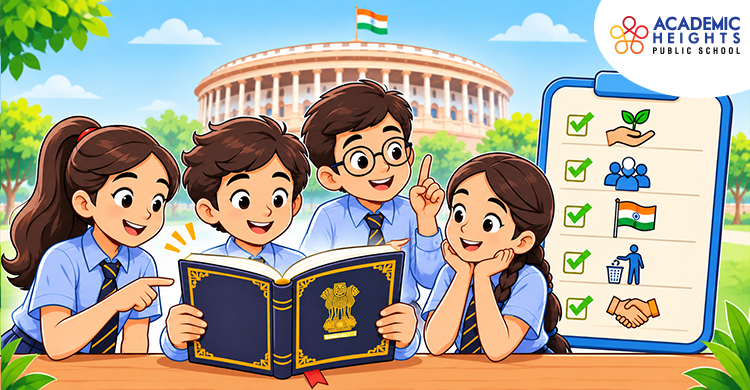
While fundamental rights centre on constitutional freedom, the meaning of fundamental duties highlights our responsibility towards the nation. Understanding fundamental rights vs fundamental duties helps us recognise how both contribute to building a responsible society.
What Do Fundamental Duties Mean Under Article 51A?
Fundamental duties are listed under Article 51A in Part IV-A of the Constitution. The meaning of fundamental duties is basically the roles and responsibilities that every citizen is expected to follow. These Article 51A fundamental duties include duties like respecting the national symbol and the national flag, along with preserving the cultural heritage of India.
The 11 Fundamental Duties of Indian Citizens
Under Article 51A, there are 11 fundamental duties of Indian citizens that encourage people to contribute beneficially to society. They are as follows.
- Respect the Constitution and National Symbols: Every citizen is required to uphold the Constitution’s principles and institutions, including the National Anthem and the National Flag. This entails abiding by the law, respecting democratic institutions, and treating national symbols with respect.
- Cherish the Ideals of the Freedom Struggle: Citizens should cherish and follow the noble ideals that inspired the national struggle for freedom, such as non-violence, truth, equality, justice and liberty. These values guided our freedom fighters, and remembering them helps shape responsible citizens who protect the hard-won independence and democratic character of the nation.
- Uphold the Nation’s Sovereignty, Unity and Integrity: First and foremost, every citizen must protect India’s sovereignty, unity and integrity. In practice, this means rejecting separatism, violence or any activity that threatens national security. Moreover, citizens should place the nation’s collective interest above narrow regional, linguistic or political divisions, and, ultimately, support efforts that keep the country strong, united and secure.
- Defend the Country and Offer National Services When Called Upon: When called upon, citizens must defend the country and render national service. This does not only mean joining the armed forces; it also covers cooperating during emergencies, wars or natural disasters. The duty reflects the idea that a nation’s security depends on the willingness of its people to contribute when needed.
- Promote Harmony and Renounce Practices That Demean Women: Citizens must promote harmony and a spirit of common brotherhood amongst all, irrespective of any religious, linguistic, regional or sectional diversities. They must also renounce practices derogatory to the dignity of women. In a diverse country like India, this duty encourages mutual respect, tolerance and equal treatment of everyone.
- Preserve India’s Cultural Heritage: First, citizens should value and preserve the rich heritage of India’s culture. Over time, Indian culture has been shaped by many religions, languages, art forms and traditions over thousands of years. As a result, this duty asks people to protect monuments, festivals, crafts and customs and, ultimately, to pass them on respectfully to future generations.
- Protect the Natural Environment : Above all, every citizen must protect and strive to improve the natural environment including forests, lakes, rivers and wildlife, and show compassion for living creatures. In practice, this covers practical actions like avoiding pollution, saving water and energy, planting trees and , finally, not harming animals.
- Developing a Scientific Temperament, Humanism and the Spirit of Reform and Inquiry: In essence, citizens should develop scientific temper, humanism and the spirit of inquiry and reform. In practical terms, this means questioning blindly accepted beliefs, relying on evidence and reason, rejecting superstition, and, above all, treating other people with compassion.
- Protect Public Property and Avoid Violence: Citizens must safeguard public property and abjure violence. Damaging buses, trains, government buildings or other public assets during protests or disputes harms everyone, since these are built with public money. This duty promotes peaceful expression of disagreement and responsible use of shared resources that belong to the whole community.
- Strive for Excellence: Citizens should strive towards excellence in all spheres of activities so that the nation constantly rises to higher levels of achievement. Whether as students, workers, farmers, artists or professionals, citizens are expected to do their work sincerely, improve their skills and contribute to the country’s progress and global standing.
- Provide Education to Children: This was added by the 86th Amendment Act in 2002; this duty states that every parent or guardian is to provide opportunities for education to their child aged six to fourteen years. It works alongside Article 21A, which makes education a fundamental right, ensuring that every child actually attends school and that families share responsibility with the State.
Are Fundamental Duties Enforceable by Law?
Fundamental duties are not enforceable by law. You cannot go to court and force someone to follow them, and there is no punishment written if you tend to ignore them. However, parliament and state legislatures can make laws to support certain duties. Courts may also consider these duties while interpreting legal provisions. Understanding this difference between fundamental rights and fundamental duties helps clarify their role in the Constitution.
Fundamental Rights vs Fundamental Duties: Key Differences
Both fundamental rights and fundamental duties are crucial for students and individuals to learn. Understanding their differences can help students recognise the balance between freedom and responsibility. Let’s take a better look at understanding Fundamental Rights vs Fundamental Duties.
| Basis | Fundamental Rights | Fundamental Duties |
| Meaning | Entitlements guaranteed by the Constitution | Constitutional responsibilities of citizens |
| Nature | Rights and freedoms | Duties and responsibilities |
| Constitutional Part | Part III | Part IV-A |
| Article | Articles 12–35 | Article 51A |
| Purpose | Protect individual freedoms and interests | Encourage responsible citizenship |
| Applicability | Depends on the particular right; some apply to all persons and others to citizens | Apply to Indian citizens |
| Enforceability | Generally enforceable through courts | Not directly enforceable in the same manner |
| Example | Freedom of speech, subject to reasonable restrictions | Respecting the Constitution and protecting public property |
How Are Fundamental Rights and Fundamental Duties Connected?
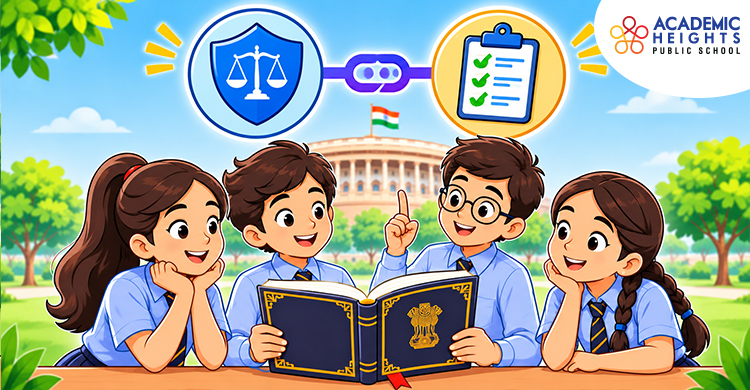
Rights and duties are two sides of the same coin. Understanding Fundamental Rights vs Fundamental Duties highlights this point as fundamental rights provide freedom and protection, while fundamental duties encourage people to contribute to national progress.
Fundamental Rights and Duties as Two Sides of a Democratic Society
Fundamental rights and duties complement each other. For example, freedom of expression allows people to share their opinions, but it is their responsibility to be respectful of other people and promote harmony. This balance between Fundamental Rights vs Fundamental Duties is crucial for the proper functioning of the government and the nation.
Real-Life Examples of Rights Balanced by Duties
A student can express their personal opinion but should remain respectful to other classmates. Citizens can use public facilities while having a responsibility to protect them. Fundamental rights and duties for students can highlight this balance very well as everyone should remain respectful to each other and other opinions while also having their own beliefs.
Why Rights Work Best When Duties Are Followed
Part III and Part IV-A of the Constitution talk about all the fundamental rights and fundamental duties. Rights and duties go hand in hand. The right to equality works best when you treat everyone with an equal amount of respect and avoid discrimination. Every citizen should have the right to practise their religion while also staying respectful of others’ religion or religious beliefs.
Why Is It Important to Learn Fundamental Rights and Duties?
Learning about fundamental rights and duties for students builds respect for the Constitution, democracy and responsible citizenship at an early age. Understanding Fundamental Rights vs Fundamental Duties can also help students understand the country and the Constitution better.
How Fundamental Rights Protect Students
Fundamental rights and duties in schools are taught to ensure that every student knows their rights and is treated equally without any discrimination. It is important for every student to understand why Fundamental Rights vs Fundamental Duties is important for their country and their freedom.
Fundamental Duties Students Should Follow Every Day
Students can practise fundamental duties in everyday life with these simple everyday actions. Some of these fundamental rights and duties examples highlight how students can express their personal opinions and be responsible citizens.
- Respecting the National Flag and the National Anthem
- Keeping the surroundings clean
- Protecting the school property
- Respecting classmates and teachers
- Avoiding discrimination and helping others
Building Responsible Citizens Through Value-Based Education

Value-based education can help students understand that becoming a responsible citizen involves more than just academic achievements; it also involves learning basic and constitutional values such as equality, respect, honesty, environmental awareness, and national unity. The balance between fundamental rights vs fundamental duties helps them understand freedom and the price of freedom.
Frequently Asked Questions
Q1. What is the main difference between fundamental rights and fundamental duties?
Fundamental rights are basically constitutional protections that guarantee freedom and equality, while fundamental duties are basic responsibilities that encourage citizens to respect the Indian Constitution. This is a crucial point in understanding the key difference between fundamental rights and fundamental duties.
Q2. How many fundamental rights and fundamental duties are there in India?
Fundamental Rights vs Fundamental Duties is a very important topic for students to understand. There are a total of 6 fundamental rights of India and 11 fundamental duties of Indian citizens. Both the fundamental rights and the fundamental duties are present under Part III and Part IV-A of the Constitution.
Q3. Are fundamental duties enforceable in court?
Fundamental duties are not enforceable through courts, unlike fundamental rights. However, laws can be introduced to support certain duties and courts may consider them while interpreting constitutional provisions. A key difference between fundamental duties vs fundamental rights is that one can be fought in the court of law while the other cannot be violated.
Q4.Which amendment added fundamental duties to the Constitution?
The Article 51A fundamental duties were added under the 42nd Constitutional Amendment Act of 1976, introduced under Part IV-A of the Indian Constitution. Initially, there were 10 fundamental duties, but in 2002, the Constitution of India with the 86th Amendment Act introduced education for children as a prominent fundamental duty.
Q5. Why are fundamental rights not absolute?
Fundamental rights are not absolute because reasonable restrictions are necessary to protect the public, social order, national security and people’s rights. While Fundamental Rights vs. Fundamental Duties highlights the balance between individual freedoms and responsibilities towards the nation, these restrictions help ensure that personal liberties do not come at the expense of society’s interests.
Q6. Why is it important for students to learn about fundamental rights and duties?
Learning about fundamental rights and duties for students can help them understand their constitutional protections and responsibilities better. Teaching fundamental rights and duties can encourage students to practice equality, respect, discipline, and national unity while also helping them to be well-informed and become responsible citizens.
Conclusion
Fundamental Rights vs Fundamental Duties are both major pillars of Indian democracy. Both are required for proper functioning of the government and the country. While fundamental rights protect individual interests and freedoms, fundamental duties encourage citizens to contribute towards society and national development. Both are key to maintaining equality, unity, and harmony. The importance of fundamental rights and fundamental duties lies essentially in this: If the nation thrives, then so do the citizens.