
Why students procrastinate in school is a question almost every student can relate to at some point. Have you ever opened your school book, stared at the page, and suddenly felt the urge to clean your desk, check your phone, or do literally anything else?
What is surprising is that procrastination isn’t always laziness. Fear, pressure, confusion, or even boredom can be behind it sometimes. The good news? When you know what the real causes are, it’s much easier to fix them.
What Is Student Procrastination and Why Does It Matter
Student procrastination often looks simple on the surface, but hidden habits, emotions, and thought patterns quietly shape it in ways most students never realise.
Meaning of Procrastination in Students
Procrastination in students means the delay of important school tasks, even though students know those tasks must be completed on time. They neglect assignments, lessons, projects, and studying due to distractions, lack of motivation, anxiety, or fear of failure.
How Common Is Procrastination in Schools
What may seem like an occasional delay is often connected to deeper student procrastination causes that slowly turn procrastination into a daily routine for many students. For example, one moment you are planning on studying, and the other moment your mobile device, friends, or simply your thoughts distract you.
Due to school-related stress and numerous distractions, procrastination eventually becomes a routine without you knowing it.
Impact of Procrastination on Academic Performance
The impact of procrastination on students is a lot like a tiny leak in your school bag. Initially, it does not seem harmful, but slowly everything starts falling apart.
Delaying school tasks may cause you to hurry up and do your homework in a rush, have low concentration levels, poor self-confidence, and stress.
Reasons Why Students Procrastinate in School
The hidden reasons students procrastinate in school are often deeper than they appear. Behind simple delays, there are hidden thoughts, emotions, habits, and pressures quietly influencing student behaviour every single day.
Fear of Failure and Perfectionism
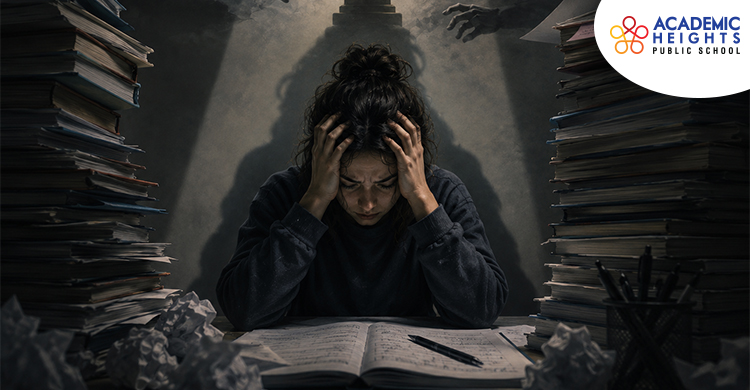
One of the biggest reasons students procrastinate in school is the fear of making mistakes or not performing perfectly.
Sometimes, you postpone your tasks due to the fear that the work will not be “good enough.” This silent anxiety puts pressure on you, and the tasks become harder to start.
Low Engagement in Academic Subjects
Imagine you enjoy science experiments but find history lessons boring and difficult to connect with. The moment you see history homework, you start saying, “I’ll do it later.”
Slowly, revision gets delayed, assignments pile up, and studying begins to feel more like pressure than something interesting or meaningful to you.
Ineffective Time Management Habits
Why students procrastinate in school often connects to poor time management more than laziness.
You may think that you have enough time remaining; however, the truth is that deadlines are approaching fast. Without proper planning, small tasks pile up quickly, creating stress and rushed last-minute work.
Distractions from Technology and Social Media
You sit down to study for a few minutes, but one notification quickly turns into watching videos, scrolling posts, or chatting with friends.
Gradually, you divert your attention away from studying without even realising it. These little distractions contribute to making procrastination part of your routine.
Lack of Clear Goals and Motivation
When students do not have clear goals, studying can start feeling directionless and exhausting.
It becomes harder to stay motivated when you are unsure why a task really matters. Without a strong sense of purpose, even important school activities often get delayed again and again.
Psychological Reasons Why Students Procrastinate in School
Why students procrastinate in school is not always connected to habits or distractions alone. Sometimes, deeper psychological patterns quietly influence student behaviour in ways they may not even realise.
Impact of Gadgets and Online Distractions
Have you ever chosen five minutes of scrolling or gaming over finishing homework first? That is where student time management problems often begin.
Your brain automatically leans toward activities that give an immediate thrill rather than waiting for the bigger reward later in life.

Low Self-Confidence in Students
When you stop believing in your abilities, even small school tasks can start feeling difficult. A student with low self-confidence may think, “What if I fail anyway?” and avoid starting the work completely.
Over time, this fear quietly builds procrastination habits and makes learning feel more stressful than motivating.
Why Students Procrastinate in School Under Academic Pressure
Why students delay homework often becomes clearer when you imagine carrying a school bag so heavy that you feel tired before even reaching class. Academic pressure can feel exactly like that.
Too many assignments, tests, expectations, and deadlines leave students mentally exhausted, making even simple homework feel stressful and difficult to start.
Negative Effects When Students Procrastinate in School
The negative effects and impact of procrastination on students do not always appear immediately. Sometimes, small delays quietly build into deeper struggles that slowly begin affecting school life in unexpected ways.
Increased Stress and Anxiety
Student procrastination causes stress that feels like a ticking clock constantly running in your mind. As a result, when you delay assignments or revisions, the pressure becomes harder to bear. Eventually, it reaches a point where even small assignments become a source of anxiety.
Decline in Academic Performance
Think about studying for a test just a day before the examination, since you have been postponing the process of studying again and again.
While you may understand certain concepts, studying in a hurry causes errors, misunderstandings, and poor concentration. Ultimately, incomplete preparation begins to impact your academic performance.
Reduced Productivity and Discipline
Why students procrastinate in school often connects to habits that slowly reduce their productivity and discipline. You start with doing one thing, and then distractions start drawing your attention away from it.
Slowly, the behaviour patterns get disrupted, and handling academic activities becomes increasingly difficult.
Negative Impact on Self-Esteem
Procrastination can feel like a small crack in a mirror. At first, you barely notice it, but with every delayed task and missed goal, the crack slowly spreads.
Over time, it grows. The little voice in your head telling you, “Perhaps I’m not good enough,” will begin to take shape gradually.
How Schools Can Fix Procrastination in Students
How schools can reduce procrastination is not always about stricter rules or more homework. Sometimes, the real change begins through small shifts in support and the way students experience learning every day.
Teaching Time Management Skills Early
Teaching time management early is like helping students learn how to ride a bicycle before entering a busy road. When schools guide students in planning homework, managing deadlines, and balancing study time properly, students feel less overwhelmed.
These habits slowly help them stay organised, focused, and more confident in handling school responsibilities.
Creating Structured Daily Routines
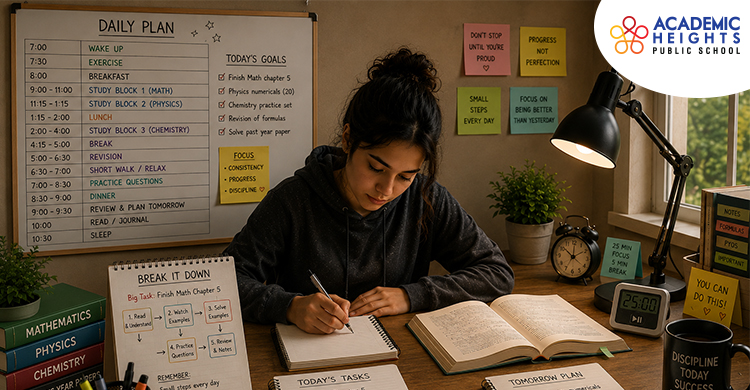
One of the best ways schools can fix procrastination habits is by creating structured daily routines for students. When schools maintain a clear balance between classes, activities, revision, and breaks, students feel less confused and stressed.
Simple routines slowly train students to stay disciplined and complete tasks more consistently.
Breaking Tasks into Smaller Goals
Big tasks are usually intimidating for students even before the task begins. However, schools can reduce this pressure by breaking up the big assignments into smaller goals that require fewer steps.
By doing each step little by little, students can feel more relaxed, motivated, and refrain from procrastinating on the task at hand.
Encouraging Active Learning Methods
Sometimes, the reasons students procrastinate in school connect to lessons that feel passive or difficult to engage with.
Schools can promote learning where students are actively involved in class by using methods such as discussion, activities, and project work. With engagement, the learning process is made enjoyable and motivating.
Providing Regular Feedback and Support
Imagine solving a puzzle without knowing whether the pieces are fitting correctly. Students often feel the same way without proper feedback and support.
Regular feedback and guidance from teachers make students feel understood and motivate them to accomplish school assignments.
Role of Teachers in Reducing Why Students Procrastinate in School
How teachers can stop student procrastination is sometimes hidden in small classroom actions that students may not even notice at first. Let’s explore the role of teachers in reducing procrastination.
Setting Clear Expectations for Students
A simple strategy for how to improve student productivity in school is to set clear expectations from the beginning. The teacher’s ability to clarify expectations in terms of deadlines, class objectives, and assignments helps students avoid confusion.
This strategy encourages organisation, focus, and responsibility among students.
Using Engaging Teaching Techniques
Have you ever noticed how a history lesson feels more interesting when it sounds like a real story instead of memorising dates?
Imagine learning about kings, wars, or freedom fighters through roleplays, debates, or storytelling. When classrooms feel interactive like this, students naturally stay more focused, involved, and less likely to delay school tasks.
Monitoring Student Progress Regularly
Monitoring the progress of students enables teachers to identify early signs of difficulties that can become serious issues later on. Routine checks, feedback, and class observations create a sense of support and accountability among students.
As a result, they will feel more motivated to keep up with their work on a daily basis.
How Parents and Schools Can Work Together
When parents and schools work together, students often develop stronger habits and learning routines. Even student time management problems can slowly improve through consistent guidance from both home and school.
Building Consistent Study Habits at Home
Think of study habits like brushing your teeth. You do not wait to “feel motivated” every day because the routine already exists.
When parents and schools motivate students to maintain regular study schedules and learning routines, studying becomes more organised, consistent and less stressful over time.
Limiting Distractions and Screen Time
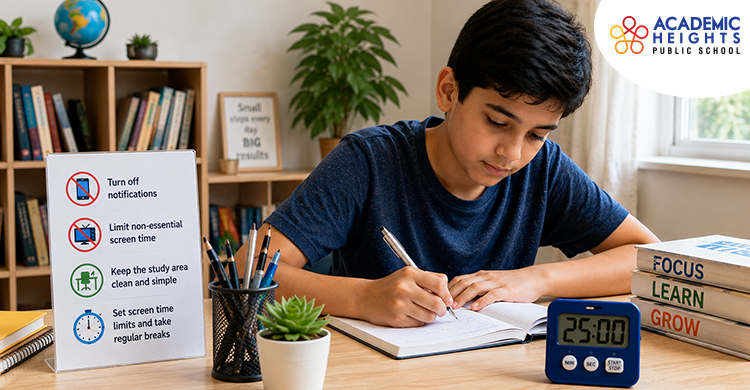
Research from Scientific Reports and PubMed shows that even small digital distractions reduce concentration. That is how the impact of procrastination on students slowly grows.
When parents and schools set clear screen-time limits and structured study routines together, students find it easier to stay focused on studies and homework.
Encouraging Positive Reinforcement
Student motivation is like giving a player energy in a game. Every little “Good job!”, “You improved!” or “Keep going!” from parents and teachers builds confidence and excitement.
When students are praised more than they are criticized, they are happier, more motivated, and more likely to do their tasks consistently.
Practical Strategies to Fix Why Students Procrastinate in School
Ways schools can fix procrastination habits may not always require big changes. Sometimes, simple strategies used at the right time can quietly change how students approach their studies and responsibilities.
Use of Activity-Based Learning
Improving student productivity in school becomes easier when learning is interactive rather than repetitive.
Just think, what would you prefer, to sit and listen to long explanations or to participate in games, projects and activities?
When students are actively engaged in learning, they are less bored, and it is much easier to stay on task.
Introducing Reward Systems
Let’s be honest, even adults feel happy after getting rewards, so why wouldn’t students? Something as simple as a “Well done!”, bonus points, stickers, or extra activity time can make you feel excited about completing tasks.
These little rewards slowly turn to studying from “Ugh, again?” into “Okay, let’s do this!”
Teaching Goal-Setting Techniques
Imagine being told to climb a huge staircase in one jump. Sounds impossible, right? Studies can feel the same way when tasks look too big.
But when both teachers and parents help students set small, step-by-step goals, work starts to feel easier, less stressful, and much more manageable to complete on time.
Conclusion
As we come to the end of this blog, we hope this article gave you insights into why students procrastinate at school and the various underlying reasons for their procrastination.
From distractions and pressure to motivation and confidence, student behaviour is shaped by more than it appears on the surface. With support from parents, teachers, and schools, students can slowly build healthier routines, stronger focus, and more positive learning habits over time.
And if you are curious about what really affects student focus and concentration in classrooms, don’t miss our blog on The Science Behind Attention Span in School Kids.
FAQs About Students Procrastinating in School
A1. Students often procrastinate because of stress, distractions, fear of failure, or lack of motivation.
A2. Teachers can reduce procrastination by making lessons engaging, setting clear goals, and giving regular support to students.
A3. Creating routines, setting small goals, and planning study time properly can improve student time management.
A4. Yes, procrastination can increase stress, anxiety, guilt, and lower students’ confidence over time.
A5. Schools can motivate students through interactive learning, positive feedback, rewards, and supportive classroom environments.